Africa II
By Vincent Reifer
April 19, 2026
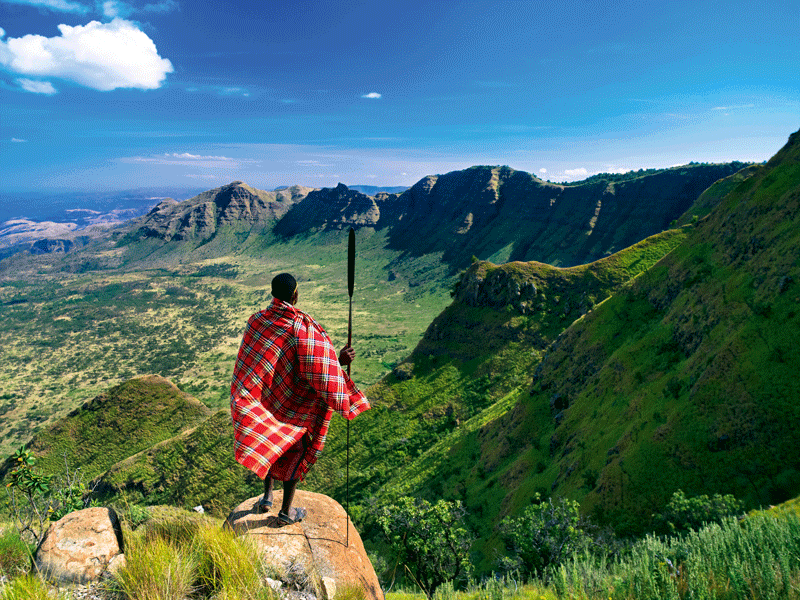
Before long, geologically speaking, East Africa is going to need to throw a big party. For a new continent that is being built off the Horn crust by crust as the oceanic crust layers rise from deep within Earth. The guest list will run from the Red Sea to Mozambique.
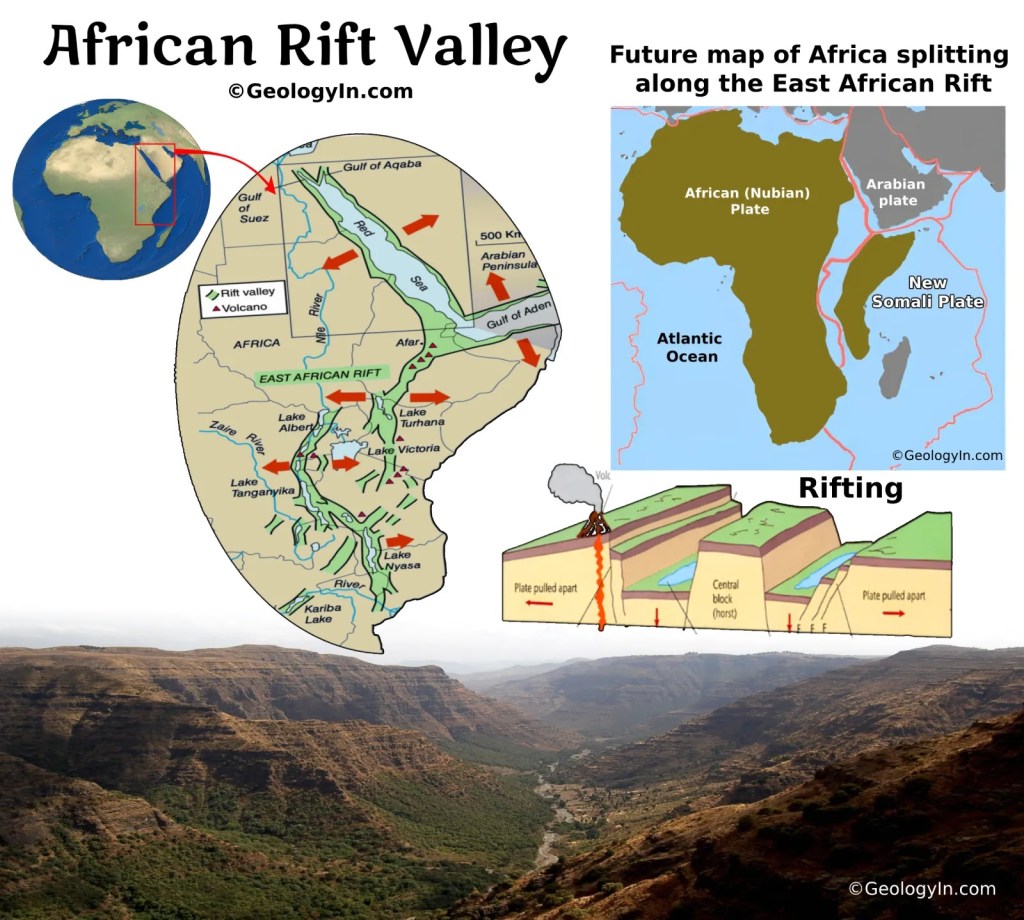
The East African Rift system is a 1,900 mile long geological fracture that is tearing the African continent in two. The split has been going on now for roughly 25 million years.
Africa sits on 2 tectonic plates: the Nubian plate carries most of the land mass and the Somali plate, which carries the Horn of Africa and a strip of the east coast running south through Kenya, Tanzania, and Mozambique. The separation has been dragging on at a fingernail pace. In 5 to 10 million years, according to projections from the University of Rochester, as the valley widens, the Indian Ocean and Red Sea will fill in and crash into each other, creating a new ocean.
Somalia, Djibouti, Eritrea, Eastern Ethiopia, Eastern Kenya, and Eastern Tanzania will drift off as a new continent. Ethiopia will now have not only a twin but a massive coastline. Summers on the East Ethiopian coast does sound like a corny Rom Com. The mechanism driving the separation was clarified by research done by a team led by Emma Watts. At Swansea University, when writing in Nature Geoscience, her team reported that the mantle beneath Ethiopia’s Afar Triple Junction(where the Somali, Nubian, and Arabian Plates meet), there is a continental pulse going on.
While in the Afar region and along the Main Ethiopian Rift, collecting more than 130 volcanic rocks and samples. The Team identified these repeating chemical bands, which they compared to the likes of a barcode. These so-called barcodes are actually fingerprints of a rhythmic magma that surges from deep within the Earth.
There is above ground evidence as well. In 2005, in under two weeks, a 25-mile fissure opened across the Ethiopian desert. This typical size of a split would take over centuries. In 2018, a second rupture split a Kenyan Highway in two, and just last year, on November 23rd, the rift’s volcano Hayli Gubbi erupted, sending an ash plume nine miles into the atmosphere and affecting as far as India and China.
Looking to the Future
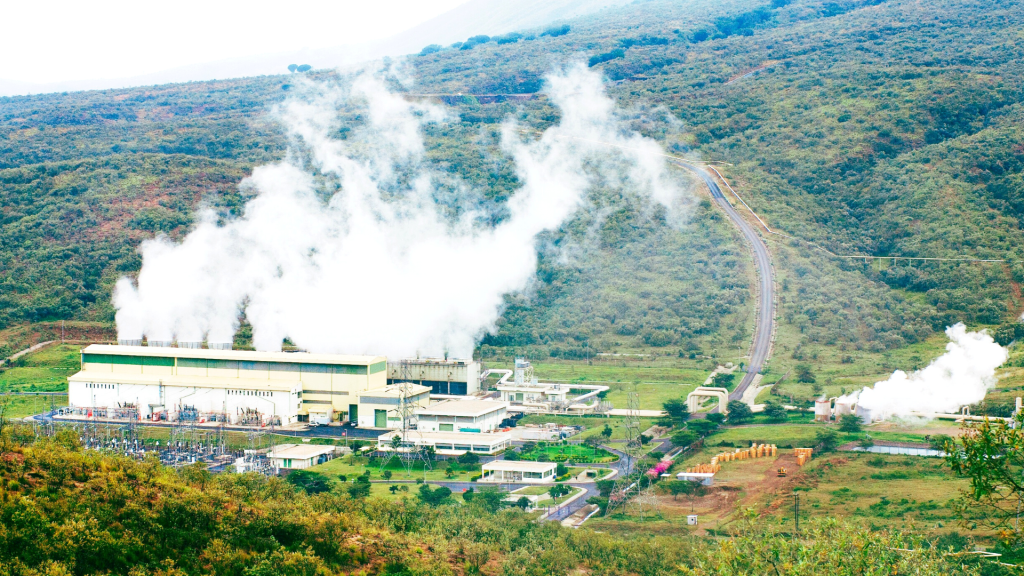
What would be lost is infrastructure and farmland, but what will be gained would be the largest untapped renewable energy reserve on Earth. The African Development Bank estimates the Rift holds about 20,000 megawatts of geothermal gold. Enough to power tens of millions of homes continuously. Kenya happens to be the continent’s geothermal pioneer and now operates the Olkaria complex, which is the largest geothermal facility in Africa. This one facility produces over 900 megawatts alone.
Kenya has also launched the Olkaria VI; this expansion is projected to reach 5,000 megawatts by 2023. Additionally, Ethiopia holds 10,000 megawatts of untapped potential as well. Along the Main Ethiopian Rift plans are being developed to use this natural power.
In terms of crunching the numbers, a kilowatt hour of Kenya Geothermal power costs only $0.07 compared to $0.18 for fossil fuel power consumption.
Senegalese Physicist and Historian Cheikh Anta Diop laid out an energy map and a plan 60 years ago. In Black Africa : The Economic and Cultural Basis for a Federated State, Diop then said that “All of East Africa should eminently be suited for the installation of plants powered by geothermal energy”. This book urges the utilization of these natural powers used by the Africans to process this raw material and bring Africa back into Paradise on Earth.
For more than a century, Raw materials have flowed outward and have been sold back to Africans with a markup. The rift offers something different; geothermal energy cannot be refined or shipped. It must be harnessed where it rises and by the hands of whom lives in the area. If the 20,000 megawatts of power that is sitting beneath the crust is utilised, Africans can power their homes, factories, hospitals, and universities.
This rift will become a major natural resource in contemporary African history. The question will become whether Africans harness the rift power for Africa or will the inheritance be extracted, financed, and owned by people from somewhere else. The new ocean is coming, and the choice remains ours.
Sources
NBC News, “A 3,000-Kilometer Fracture Is Breaking One of Earth’s Largest Continents Apart” (April 7, 2026); Emma J. Watts et al., “Mantle upwelling at Afar triple junction shaped by overriding plate dynamics,” Nature Geoscience (June 2025); University of Southampton via ScienceDaily, “A giant pulse beneath Africa could split the continent — and form an ocean” (June 27, 2025); The Geological Society of London, “East African Rift Valley” and “Triple Junction: The Red Sea/East Africa”; National Geographic Education, “Rift Valley”; Ecoticias, “What it means for Africa to split in two”; NASA Earth Observatory, “Hayli Gubbi’s Explosive First Impression” (December 2025); World Bank, “Tackling the Drivers of East Africa’s Surprising Earthquake Risk”; Global Electricity, “Kenya Launches Africa’s Largest Geothermal Complex”; BOH Infrastructure, “Kenya’s Geothermal Advantage” (2026); Capital Ethiopia, “Mapping Ethiopia’s Clean Energy Ascent” (February 8, 2026); Planète Énergies, “Kenya: How Geothermal Energy is Transforming the Country’s Energy Mix” (February 23, 2026); African Studies Centre Leiden, “Cheikh Anta Diop”; Cheikh Anta Diop, Black Africa: The Economic and Cultural Basis for a Federated State, pp. 48–49.


Leave a Reply