Reefer Maddnes 2: The Bud Strikes Back
By Vincent Reifer
May 14, 2026
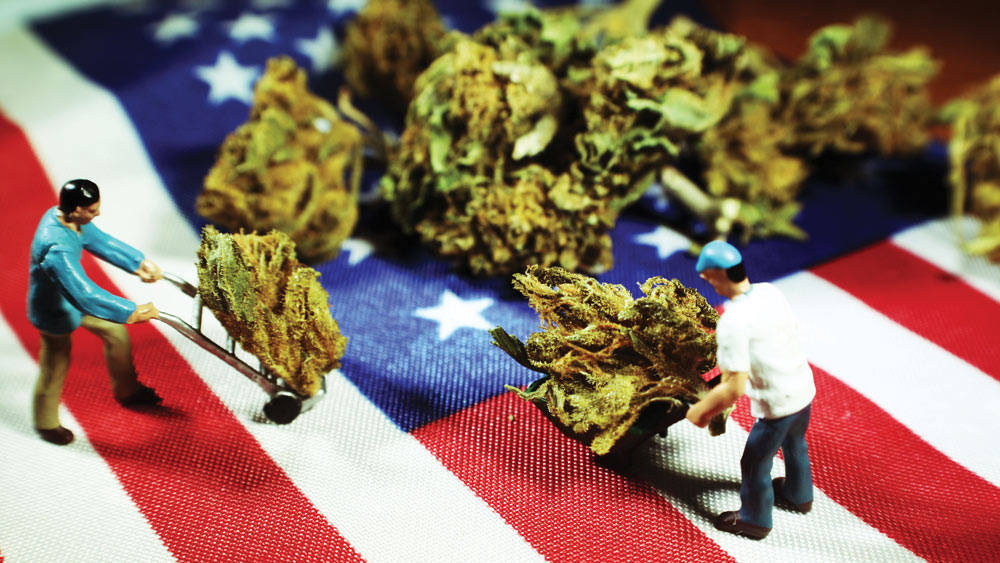
Bud, Ganja, Dagga, Pot, you know it, and some of us love it, marijuana. These days we are able to talk about it and green crosses line the streets in major cities. But before dispensaries, before the walk with the cousins at Thanksgiving and the debates, somebody decided that this plant was an enemy. Not because the public called for it, but because another kind of green was involved: money.
Consider this: George Washington’s own diaries and farm reports confirm that hemp was grown across all five of Mount Vernon. If you want more on another side of Washington and the American Experiment, please check out Dr. Roy Casagranda. Washington did not like growing hemp even though he used it for rope, canvas, and fishing nets, but the money made was from tobacco. Two centuries later, the federal government would make it a Schedule I substance, which is the same category as heroin.
The story of marijuana in this country is really a story about who gets to decide what is dangerous based on those with the most to gain economically.
They told you weed would make you crazy and immoral. They told you it would make you violent. They told you it was a gateway to destruction. At the same time these institutions were pushing to sell you cigarettes, alcohol, and opioids. Now let’s meet the man most responsible for criminalizing cannabis in America. He was not a scientist, a doctor, or a public health official, but a bureaucrat protecting his budget.
Harry Anslinger was appointed the first commissioner of the Federal Bureau of Narcotics in 1930. At this time Prohibition was on its last leg, and his agency was about to become irrelevant. Anslinger needed a new enemy, and he found one in marijuana. He used one of the age-old tricks and American tradition: racial fear.
Anslinger capitalized on societal fears, linking marijuana to drug-related crimes and stoking racial prejudices. His campaign was not subtle. He made the target explicit, declaring openly that marijuana was a Black and Brown problem, a jazz problem, a foreigner problem.
To sell the fear to the public, Anslinger needed a visual. He got it in 1936 with the release of Reefer Madness (originally titled Tell Your Children). A film that depicted marijuana use as a direct gateway to insanity, criminal acts, and societal decay, cementing a harmful and enduring stereotype. The film depicted a series of hyperbolic events starting with innocent high school students being lured into trying marijuana. These devolve into a hit-and-run accident, manslaughter, suicide, attempted rape, hallucinations, and a rapid descent into madness. None of it was grounded in science. All of it was grounded in panic.
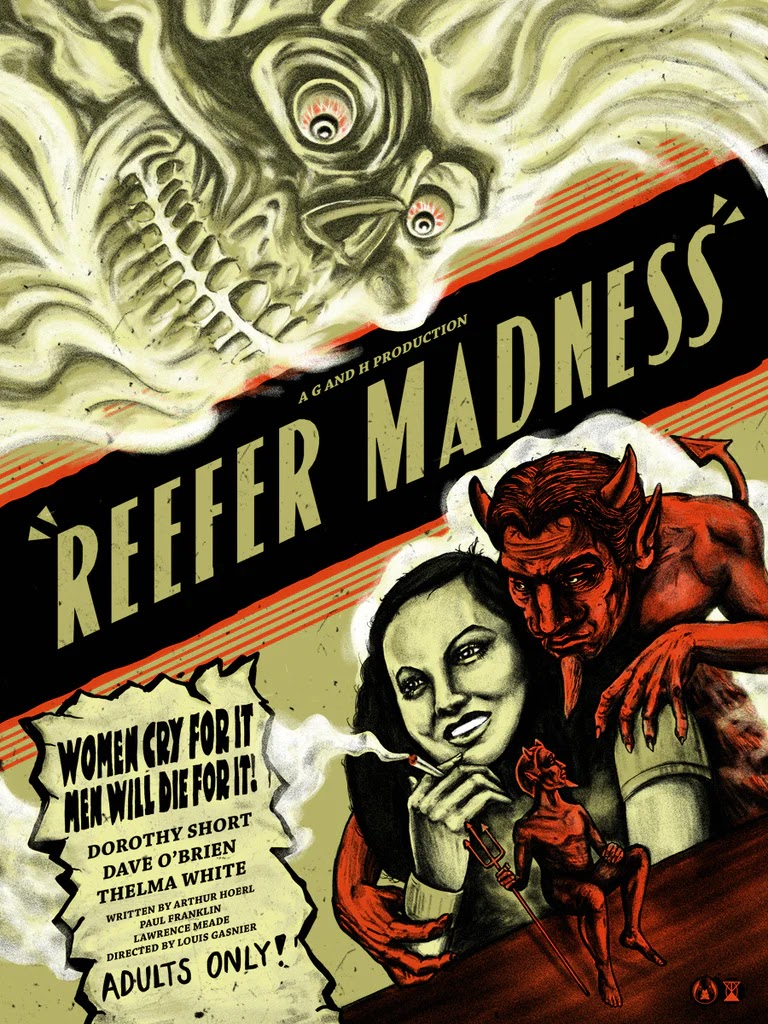
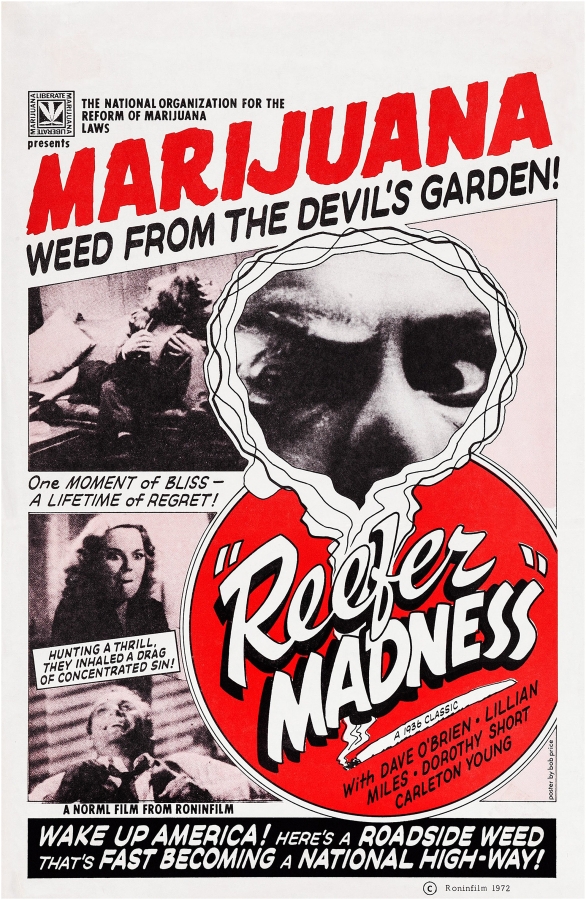
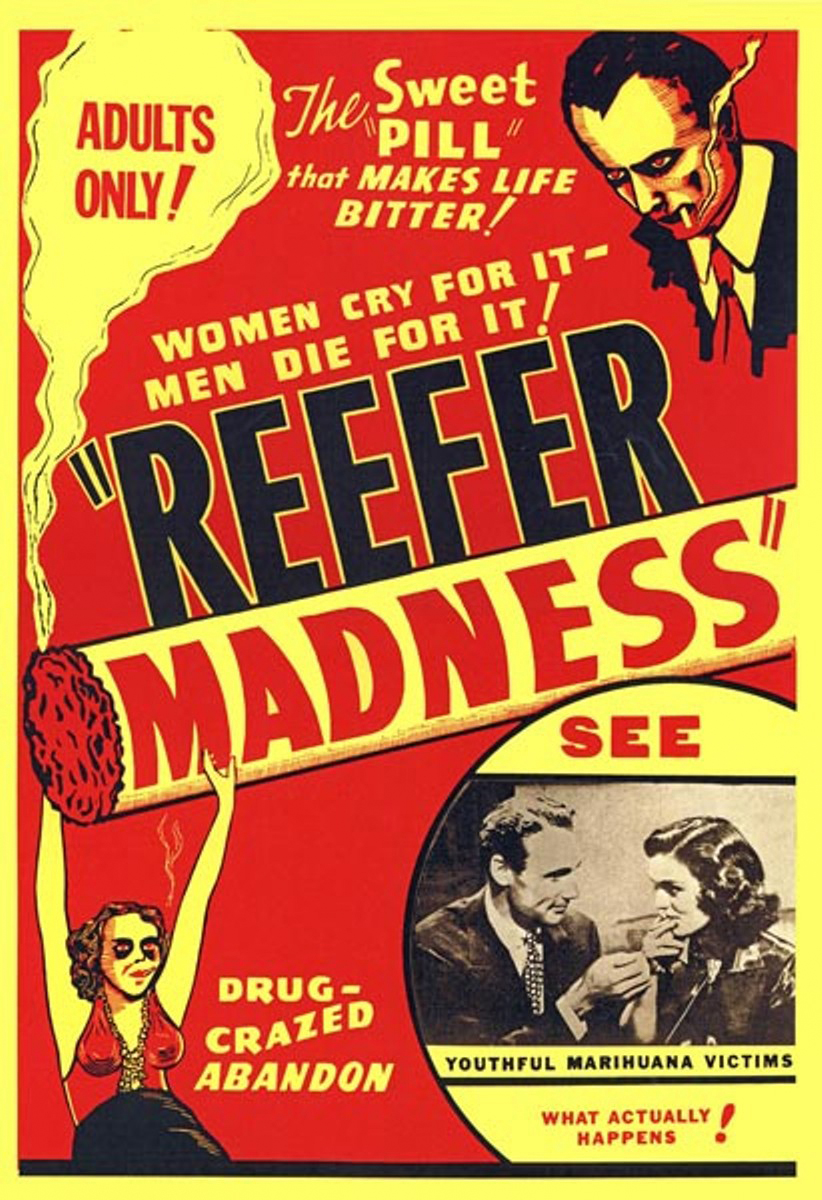
Fueled by racial prejudice, economic interests, and media sensationalism, Anslinger used every tool available to criminalize cannabis culminating in the racially motivated Marihuana Tax Act of 1937. The exaggerated fears pushed by Anslinger and films like Reefer Madness laid the foundation for the War on Drugs. A farce spanning decades that disproportionately targeted Black, Brown, Indigenous, and low-income communities.
The 70s, The War, The Drugs
To understand why Nixon declared war on marijuana in 1971, you must understand what America looked like in 1971. Malcolm X, Martin Luther King, and JFK were dead, and the protest movements against the Vietnam War had intensified tensions between the conservative white establishment and a growing counterculture that opposed everything it stood for.
According to a 1971 report by the Department of Defense, 51 percent of the armed forces had smoked marijuana, 31 percent had used psychedelics such as LSD, mescaline, and psilocybin, and an additional 28 percent had taken hard drugs such as cocaine and heroin. We havent even metioned MKULTRA going on in the background, but American soldiers were not just dying in Vietnam. They were getting high, refusing orders, and turning against their own officers.
If you needed money or were in the CIA or mafia, this new war was your bread and butter. The mountainous borderlands of Laos, Burma, and Thailand had been an opium-producing region for centuries. The demand for heroin by United States troops during the Vietnam War helped transform the opium economy of the Golden Triangle into a large and profitable heroin enterprise that influenced every aspect of regional politics.
This is the full picture of what was happening while Nixon declared marijuana the enemy. The government was not fighting drugs. Heroin and cocaine flooded Black and Brown neighborhoods through back channels protected by national security classifications. Marijuana, a plant that grows in the ground and has never killed anyone from an overdose, was classified alongside heroin as one of the most dangerous substances on earth.
Activists adopted visible markers of counterculture identity, including experimentation with drugs like LSD and marijuana, choices that signaled opposition not just to the war, but to the conformist culture many young people believed had produced it. Weed was not just a recreational substance. It was a political statement. A symbol of refusal. In the streets, on the campuses, in the music. From Jimi Hendrix to Led Zeppelin. An entire generation was building a culture around peace, consciousness, and a rejection of everything Nixon represented.
By 1973, Nixon had pushed mandatory sentencing and no-knock warrants through Congress and created the Drug Enforcement Administration. He classified marijuana as a Schedule I controlled substance alongside heroin and ignored his own commission when it unanimously recommended decriminalization. The science was never the point. Control was the point.
Then came Reagan, and the hypocrisy reached a level that almost defies description. While Nancy Reagan was traveling the country telling America’s children to just say no, her husband was signing the Anti-Drug Abuse Act of 1986. A piece of legislation that increased penalties for drug possession, created minimum sentences for drug-related offenses, and established a 100-to-1 sentencing disparity between crack cocaine and powder cocaine. The message was simple and deliberate: the drug associated with Black inner-city communities would be punished one hundred times more severely than the drug associated with white suburban users
Reagan’s own intelligence agencies participated in the urban crack cocaine explosion and used the profits from crack sales to buy weapons for wars that Congress refused to fund. The First Lady was on television telling Black children to just say no. The president’s intelligence network was the one moving the product.
All that history, where does it leave us today? Well for the first time in this country, daily marijuana use has overtaken daily alcohol consumption. An analysis coming out of Carnegie Mellon University of over 1.6 million participants collected across 40 years of data confirmed that daily cannabis use surpassed daily drinking in 2022. There are now roughly 17.7 million daily cannabis users compared to 14.7 million daily drinkers.
American drinking rates have hit a historic low. From 1997 to 2023, at least 60 percent of Americans reported drinking alcohol. By 2025, that figure had dropped to 54 percent, the lowest recorded in nearly a century of polling. The consecutive declines are unmatched in Gallup’s trend and coincide with growing research indicating that any level of alcohol consumption may negatively affect health.
Meanwhile, marijuana use has surged 65 percent between 2015 and 2024. An estimated 44.3 million Americans used marijuana every month in 2024. 64.2 million Americans reported using it within the past year. In 2024 alone, legalization states collectively generated more than $4.4 billion in cannabis tax revenue from adult-use sales.
Although cannabis taxes are high, the revenue has now reached $25 billion nationally, nearly double that of alcohol. Ganja sales added approximately $115.2 billion to the U.S. economy in 2024. The industry now supports over 425,000 full-time jobs across the supply chain, from cultivation to retail, with revenue projected to grow more than 13 percent in 2025 alone.
The Chinese Connection
The product got so good, so profitable, and so in demand that organized crime networks operating out of the world’s second largest economy decided to fly ten thousand miles, set up shop in rural Oklahoma, and corner the market. You cannot buy that kind of endorsement. But that is where the joke ends.
From California to Maine, Chinese organized crime has come to dominate much of the nation’s illicit marijuana trade, according to a joint investigation by ProPublica. The Oklahoma Bureau of Narcotics and Dangerous Drugs director put it plainly: “Chinese organized crime has taken over marijuana in Oklahoma and the United States.”
The operation began in 2018 when Oklahoma voters approved a ballot measure legalizing medical marijuana cultivation and sale. The law set no limit on the number of grows or dispensaries. Criminal networks moved immediately, paying illegal straw owners to front the licenses, building industrial scale operations, and shipping product to the East Coast, where profit margins were stratospheric. State investigators found links between foreign mafias and over 3,000 illegal grows, with more than 80 percent of the criminal groups identified as Chinese in origin.
Over the previous decade, Chinese criminal networks had quietly become the dominant money launderers for the Mexican cartels running fentanyl into the United States. Then they used those profits to pivot into cannabis.
In New England alone, federal authorities allege that since 2020, hundreds of single family homes across Maine and Massachusetts were purchased by Chinese nationals, gutted, and converted into industrial-scale illegal cannabis farms. They are staffed by workers smuggled into the country and forced to labor without pay.
While millions of people (primarily from Black and Brown communities) were incarcerated for marijuana possession, alcohol lobbyists funded political campaigns and biased studies that reinforced the stigma against cannabis. The war on drugs, fervently supported by the alcohol industry, left a devastating legacy of lives destroyed by mass incarceration, separated families, and entire criminalized communities. While alcoholic beverages, with their widely known risks to public health, continued to be freely marketed under comparatively lax regulations.
Now that prohibition is losing, the Big Three are trying a different play. As cannabis drinks steal market share from beer and liquor, the alcohol and beer industries have lobbied for years to keep marijuana illegal because they fear the competition legalized weed brings. To help with the attack, pharmaceutical companies compensate leading anti-marijuana researchers to keep their customers on painkillers over cannabis, which is cheaper. The 3rd power is the prison industrial complex and its profits from filling cells with nonviolent marijuana offenders.
The science is simple whether the lobbyists like it or not. A 2024 review of 99 clinical trials found cannabis equally effective as opioids for chronic pain, with fewer people quitting treatment due to side effects. CBD reduced anxiety by 50 percent in clinical trials. Veterans are sleeping. Cancer patients are eating. People addicted to opioids and alcohol are using it to get clean. The plant that Anslinger called the devil’s weed is now being validated by the same medical establishment that spent a century dismissing it.
Alcohol kills 95,000 Americans a year. Tobacco kills 480,000. Opioids kill tens of thousands more. All three are legal, marketed, and lobbied for. The plant that has never killed a single person from an overdose is still looked at in an idiomatic fashion. That is not public health policy. That is a business decision made by people who are not you, who don’t really care about your body but have to protect their bottom line. The lie had a good run. But the people have already moved on, and no amount of lobbying money is going to move them back. We must go forward with a good conscience.
Sources:
“Cannabis for Pain Management: What 2025 Studies Reveal.” Marijuana Doctors.https://www.marijuanadoctors.com/blog/cannabis-pain-management-studies/
“George Washington’s Crops: Hemp.” George Washington’s Mount Vernon.https://www.mountvernon.org/george-washington/farming/washingtons-crops/george-washington-grew-hemp
“Hemp Makes a Return at George Washington’s Farm.” Smithsonian Magazine, 2018. https://www.smithsonianmag.com/smart-news/hemp-makes-return-george-washingtons-farm-180970131/
“Reefer Madness: The Twisted History of America’s Weed Laws.” KQED.https://www.kqed.org/lowdown/24153/reefer-madness-the-twisted-history-of-americas-weed-laws
“What Was Reefer Madness?” Stoned Earth, March 2025. https://stonedearth.com/blogs/news/what-was-reefer-madness
“Reefer Madness: How the War on Weed Fueled America’s Cannabis Panic.” Illuminating Facts.https://illuminatingfacts.com/reefer-madness-how-the-war-on-weed-fueled-americas-cannabis-panic/
Baum, Dan. “Legalize It All: How to Win the War on Drugs.” Harper’s Magazine, April 2016. https://harpers.org/archive/2016/04/legalize-it-all/
“Nixon Adviser Admits War on Drugs Was Designed to Criminalize Black People.” Equal Justice Initiative,2022. https://eji.org/news/nixon-war-on-drugs-designed-to-criminalize-black-people/
“Nixon’s War on Drugs Targeted Black People and Antiwar Left, Adviser Says.” CNN Politics, March 2016. https://www.cnn.com/2016/03/23/politics/john-ehrlichman-richard-nixon-drug-war-blacks-hippie
Dellinger, Drew. “What’s Missing from the Stories on Ehrlichman, Nixon, and the Racist War on Drugs.” DrewDellinger.org, 2019. https://drewdellinger.org/whats-missing-from-the-stories-on-ehrlichman-nixon-and-the-racist-war-on-drugs-haldemans-corroborating-quote/
“Drug War History.” Drug Policy Alliance. https://drugpolicy.org/drug-war-history/
“Harvard Law Expert Explains Federal Government’s Push to Ease Marijuana Restrictions.” Harvard Law School. https://hls.harvard.edu/today/harvard-law-expert-explains-federal-governments-push-to-ease-marijuana-restrictions/
“The Science Behind the DEA’s Long War on Marijuana.” Scientific American.https://www.scientificamerican.com/article/the-science-behind-the-dea-s-long-war-on-marijuana/
“Vietnam War and the Counterculture.” HISTORY.com.
“Drug Use in Vietnam.” HISTORY.com. https://www.history.com/articles/drug-use-in-vietnam
“Narcs and Spies: The Drug War’s Murky Origins in Southeast Asia.” The World from PRX, June 2023. https://theworld.org/stories/2023/06/29/narcs-and-spies-drug-war-s-murky-origins-southeast-asia
“Guns, Drugs and the CIA.” PBS Frontline.https://www.pbs.org/wgbh/frontline/wgbh/pages/frontline/shows/drugs/archive/gunsdrugscia.html
“Managing the Nightmare: CIA, Media, and the Destruction of Gary Webb.” The Intercept, September 2014. https://theintercept.com/2014/09/25/managing-nightmare-cia-media-destruction-gary-webb/
“Iran-Contra Affair.” EBSCO Research Starters. https://www.ebsco.com/research-starters/military-history-and-science/iran-contra-affair
“Reagan’s National Drug Strategy.” University of Michigan History Labs — Crackdown: Policing Detroit.https://policing.umhistorylabs.lsa.umich.edu/s/crackdowndetroit/page/reagan-s-national-drug-strategy
“The Disparate Treatment of Crack Cocaine and the Opioid Epidemic.” Santa Clara University Markkula Center for Applied Ethics. https://www.scu.edu/government-ethics/resources/the-disparate-treatment-of-crack-cocaine-and-the-opioid-epidemic/
“Alex Berenson, Marijuana and Tell Your Children.” Rolling Stone.https://www.rollingstone.com/culture/culture-features/alex-berenson-marijuana-tell-your-children-trolling-777741/
“How Dangerous Is Marijuana, Really?” The Marshall Project, January 2019. https://www.themarshallproject.org/2019/01/14/how-dangerous-is-marijuana-really
“Daily Marijuana Use Surpasses Alcohol Consumption, New Study Finds.” CNBC, May 2024. https://www.cnbc.com/2024/05/23/daily-marijuana-use-surpasses-alcohol-consumption-new-study-finds.html
“U.S. Drinking Rate at New Low as Alcohol Concerns Surge.” Gallup, August 2025. https://news.gallup.com/poll/693362/drinking-rate-new-low-alcohol-concerns-surge.aspx
“Marijuana Addiction Statistics 2026.” Drug Abuse Statistics, January 2026. https://drugabusestatistics.org/marijuana-addiction/
“Americans Report Using Marijuana More Frequently Than Alcohol.” NPR, May 2024. https://www.npr.org/2024/05/26/nx-s1-4977448/americans-report-using-marijuana-more-frequently-than-alcohol-what-are-the-risks-of-both
“Tobacco Use, Binge Drinking Decrease as Americans Consume More Marijuana.” STAT News, July 2025. https://www.statnews.com/2025/07/29/marijuana-tobacco-binge-drinking-federal-report/
“2026 Cannabis Industry Statistics.” Flowhub, February 2026. https://www.flowhub.com/cannabis-industry-statistics
“States Collected Nearly $25 Billion from Legal Adult-Use Cannabis Sales.” Marijuana Policy Project, May 2025. https://www.mpp.org/news/press/states-collected-nearly-$25-billion-from-legal-adult-use-cannabis-sales/
“Analysis: State-Legal Cannabis Sales Top $30 Billion in 2024.” NORML, May 2025. https://norml.org/blog/2025/05/13/analysis-state-legal-cannabis-sales-top-30-billion-in-2024/
“Cannabis Industry Statistics 2024.” IndicaOnline, June 2025. https://indicaonline.com/blog/industry-statistics-2024/
“2025 Cannabis Industry Statistics & Market Insights.” Paybotic Financial, October 2025. https://payboticfinancial.com/cannabis-industry-statistics-2025/
“Who’s Really Fighting Legal Marijuana?” U.S. News & World Report, December 2014. https://www.usnews.com/opinion/articles/2014/12/08/pot-legalization-opponents-aim-to-protect-their-bottom-line
“Big Alcohol and Big Tobacco Coalition Emerges to Shape Legalization in Their Favor.” NORML, March 2021. https://norml.org/blog/2021/03/12/big-alcohol-and-big-tobacco-coalition-emerges-to-shape-legalization-in-their-favor/
“Big Alcohol Asks Congress to Ban Hemp-Derived THC Sales.” MJ Biz Daily, November 2025. https://mjbizdaily.com/alcohol-industry-sends-congress-mixed-messages-on-hemp-derived-thc/
“How Major Alcohol Companies Are Trying to Take Over the Legal Cannabis Industry.” Dinafem.https://www.dinafem.org/en/blog/how-major-alcohol-companies-are-trying-to-take-over-the-legal-marijuana-industry/
“These Are the Alcohol Companies That Want to Keep Weed Illegal.” VinePair, May 2021. https://vinepair.com/articles/alcohol-companies-that-dont-like-weed/
“Big Money Fights to Block Marijuana Legalization.” RepresentUs. https://act.represent.us/sign/marijuana
Rotella, Sebastian, et al. “Gangsters, Money and Murder: How Chinese Organized Crime Is Dominating America’s Illegal Marijuana Market.” ProPublica / The Frontier, April 2024. https://www.propublica.org/article/chinese-organized-crime-us-marijuana-market
“How the Chinese Mafia Came to Control Much of the Illicit Marijuana Trade in the U.S.” NPR Fresh Air, March 2024. https://www.npr.org/2024/03/21/1239854106/how-the-chinese-mafia-came-to-control-much-of-the-illicit-marijuana-trade-in-the
“Marijuana and Mexican Cartels: Inside the Stunning Rise of Chinese Money Launderers.” NBC News, August 2024. https://www.nbcnews.com/investigations/marijuana-mexican-cartels-stunning-rise-chinese-money-launderers-rcna158030
“Chinese Crime and Geopolitics in 2024.” Brookings Institution, January 2024. https://www.brookings.edu/articles/chinese-crime-and-geopolitics-in-2024/
“Influx of Illegal Marijuana Linked to Chinese Criminal Networks.” UPI, September 2025. https://www.upi.com/Top_News/US/2025/09/18/china-marijuana-criminal-networks-hearing/4871758219135/
“What Are the Health Benefits and Risks of Cannabis?” Medical News Today, June 2025. https://www.medicalnewstoday.com/articles/320984
“Top 7 Health Benefits of Cannabis Backed by Scientific Research in 2025.” Psychreg, September 2025. https://www.psychreg.org/top-health-benefits-cannabis-backed-scientific-research/
“Cannabis for Chronic Pain Relief in 2025.” Herb.co, January 2026. https://herb.co/guides/cannabis-chronic-pain-relief


Leave a Reply